
About Caregiving
How do you define yourself?

Care partner, caregiver, care receiver
Care partner, caregiver, care receiver, carer: How do you see yourself? While some people use “care partner” as a neutral term that suggests we are all both givers and receivers, the reality is that for many, it’s a distinctly unequal partnership. I like the term “carer” used in many English-speaking countries because really, it can be applied to anyone who cares for/about anyone in any of the above roles. I will use all of these terms on this site.
My story
As my mother began to show signs of dementia in the 1980s, I slowly took over more tasks for both my parents, assisting with cooking, cleaning, laundry, and eventually helping with hygiene issues.
In 1991, they were in a terrible car accident, and that’s when my total immersion in caregiving began. My father, who was already being treated for multiple chronic conditions, died two years later after many hospitalizations. My mother had 12 broken bones and further head injuries in the car accident. She lived 5-1/2 years after the accident, but rarely spoke a coherent word in all that time, and was totally bed-ridden during the last two years. Although I had varying degree of professional help during that time, I saw my parents daily. For her last two years, my mother lived with me, and I provided every aspect of her care. It would be hard for you to name an experience that I didn’t have as a caregiver – both good and bad – on my own and with professional help.
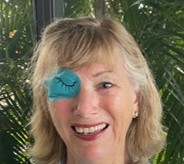 Since then, I have been a carer for a variety of other relatives with a variety of conditions. I also have honed my professional caregiving credentials. In the early 1990s, I began putting my degree in Instructional Technology (training) to work in the field of dementia care. I wrote an award-winning newsletter, turned that into books, became the behind-the-scenes video expert for clients in the U.S. and Australia, and did loads of in-person training. Using my mother as my role model, I provided practical, instantly-usable guidelines always with an upbeat attitude. (Discussing continence care, I noted, “We can’t be anal about this.”) As I noted above, my mother rarely spoke a coherent word for 5-1/2 years, but she still managed to convey joy. My helpers and all her many hospice carers loved being with her. Finding the joy that remains is my purpose in everything I have done since.
“Take a break from life’s labors and tragedies and stimulate your brain, and allow Kathy to tickle your fancy! Can’t help loving her and coming back for more, or sharing with others!”
~ Juanita N Baker, PHD
◊ ◊ ◊ ◊ ◊
“Wait Lifters is a whimsical, fun and engaging newsletter that provides you with all the resources needed to present new challenges, entertainment and inspiration to your residents. What a great way to strengthen your brain and form relationships!”
~ Brenda Richy, National Director of Resident Engagement, Solstice Senior Living
◊ ◊ ◊ ◊ ◊
“Wait Lifters is my favorite E-newsletter-always jam packed with creative, significant and fascinating news. Makes my day – every day it pops up on my devices.”
~ Mary Kay Morrison, co-founder of the AATH Humor Academy